

Non-English & Non-Latin Bibles
January 21, 2026
While we take it for granted nowadays that the Bible is readily available in a plethora of languages and therefore easily accessible to Christians around the world, that was not always the case. There is an interesting history to biblical translations. Early in the lives of biblical texts, they were translated from the original Hebrew, Aramaic, and Greek into Syriac, various Egyptian dialects, and early Germanic languages.
After being commissioned by Pope Damascus I, St. Jerome began to translate the Bible starting in 382. He began with the Gospels but ultimately did translate both the Old and New Testaments in full, which then became known as the Latin Vulgate and served as a common source for many subsequent Biblical translations into many other languages. Throughout the centuries, translations continued to be created and distributed to Christians globally. However, in Europe, it was a slightly different story. It is largely believed that Pope Innocent III (1161-1216) either strongly discouraged or openly forbade translations from the Latin.
The western Church utilized Latin as the official theological and liturgical language. Thus, it was more common for psalters and prayers books to be translated into everyday languages rather than the whole Bible, even without any papal decrees. But once the Reformation gained traction in the 16th century, we begin to see more European-language Bibles published. Martin Luther’s German translation from the Hebrew and Greek instead of the Latin Vulgate was indicative of the major shift occurring in the Church throughout Europe, which only grew as the translation served as the inspiration or foundational text for subsequent translations into other European languages. Though, the translation controversy found itself largely centered in Merrie England.
Early English-language biblical translators found themselves the victims of heresy charges, punishments, and excommunication. John Wycliffe, who published biblical translations into Middle English in the 14th century was even posthumously declared a heretic. It would be over 100 years before the first officially – read: royally – sanctioned Bible is published in 1539.

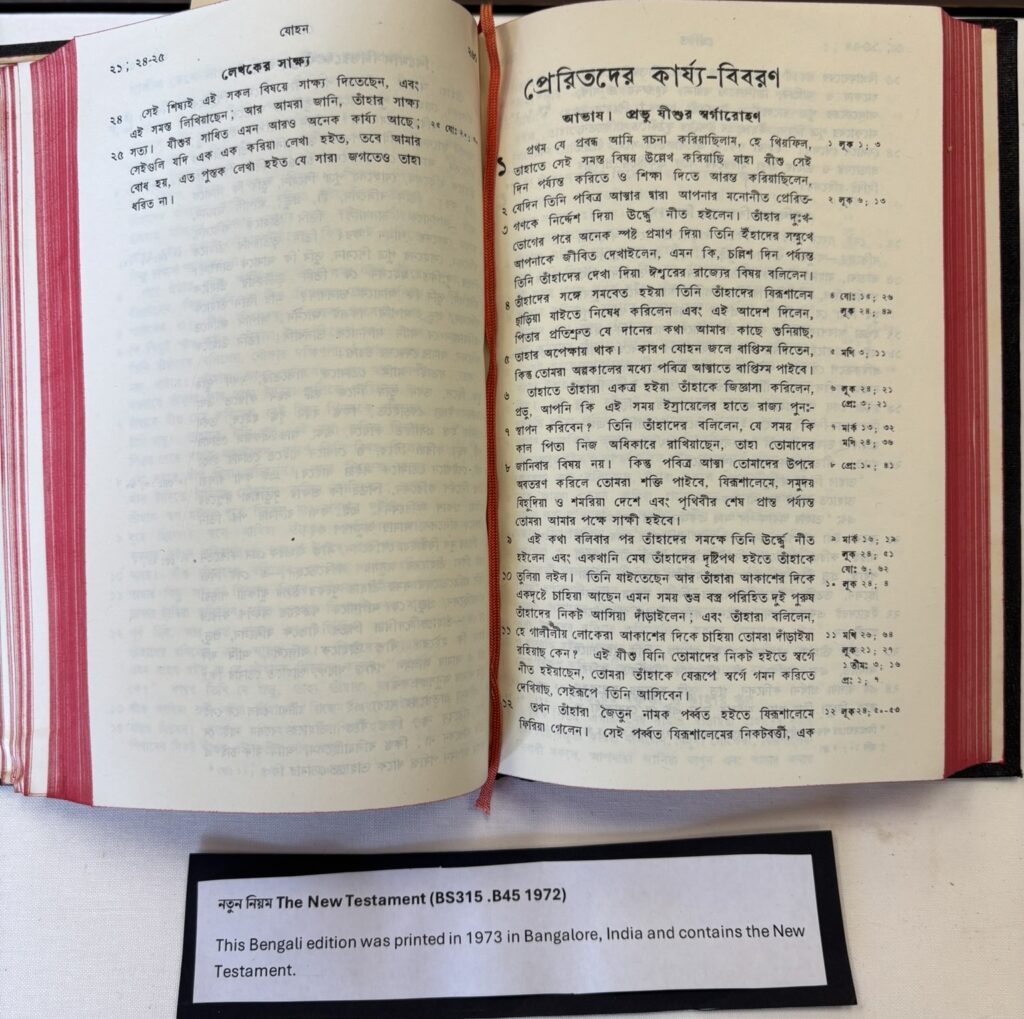
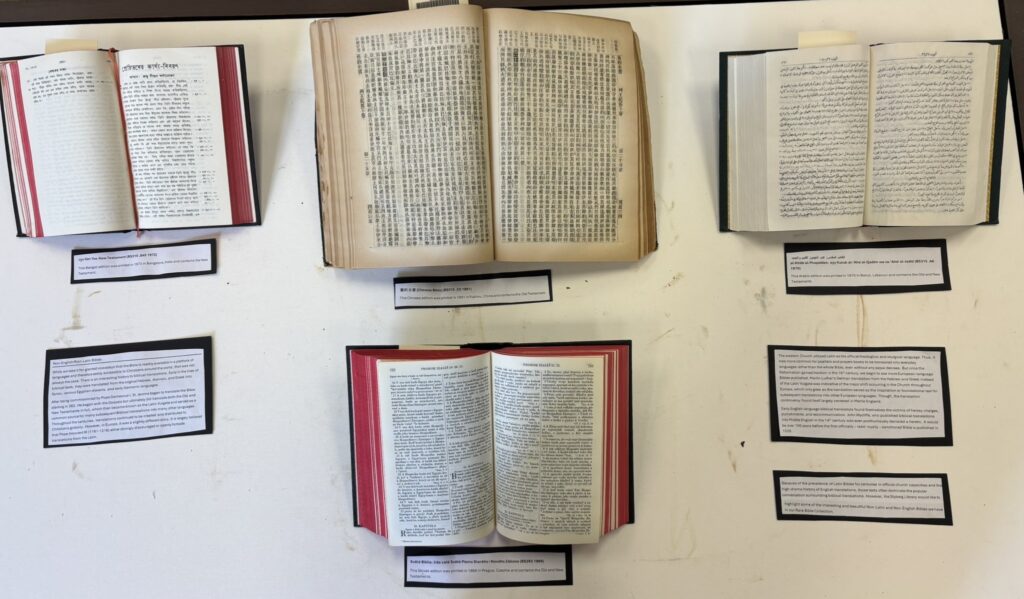
নতুন নিয়ম The New Testament (BS315 .B45 1972)
This Bengali edition was printed in 1973 in Bangalore, India and contains the New Testament.
舊約全書 [Chinese Bible] (BS315 .C5 1891)
This Chinese edition was printed in 1891 in Fuzhou, China and contains the Old Testament.
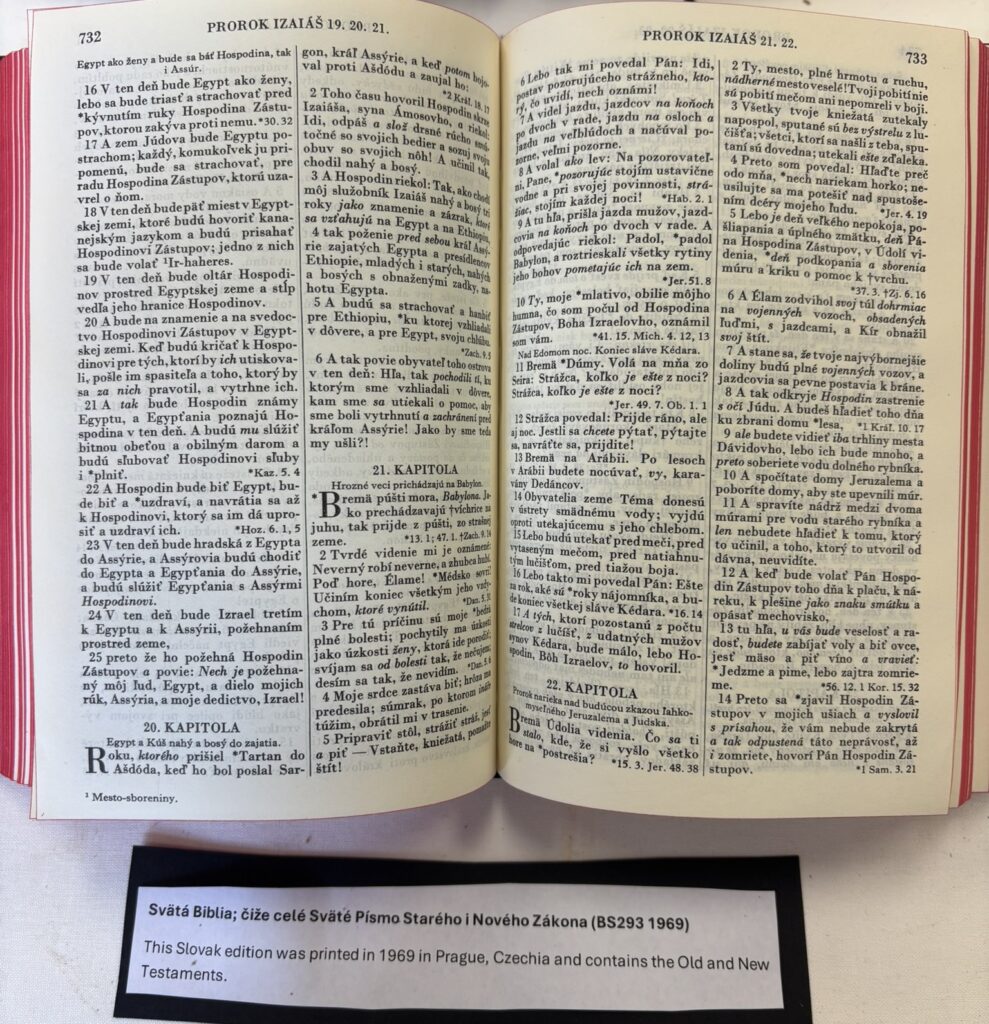
Svätá Biblia; čiže celé Sväté Písmo Starého i Nového Zákona (BS293 1969)
This Slovak edition was printed in 1969 in Prague, Czechia and contains the Old and New Testaments.
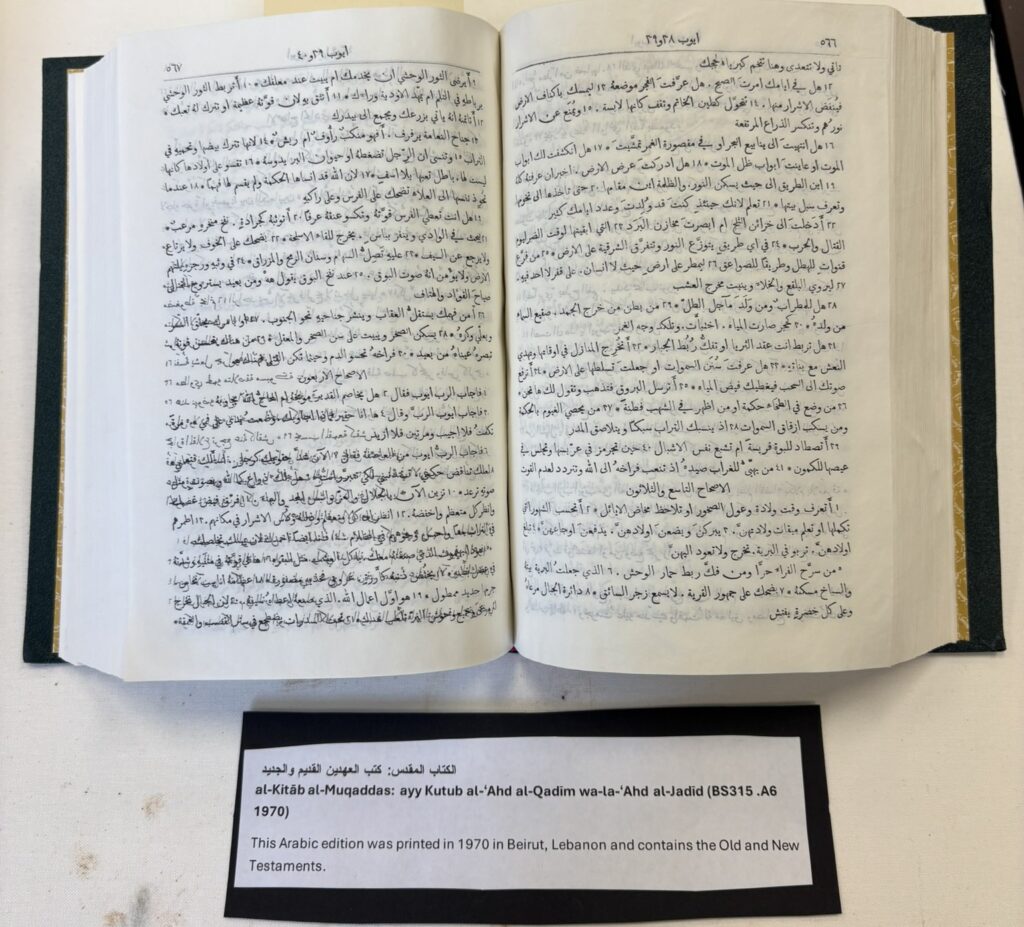
al-Kitāb al-Muqaddas: ayy Kutub al-ʻAhd al-Qadīm wa-la-ʻAhd al-Jadīd (BS315 .A6 1970)
This Arabic edition was printed in 1970 in Beirut, Lebanon and contains the Old and New Testaments.
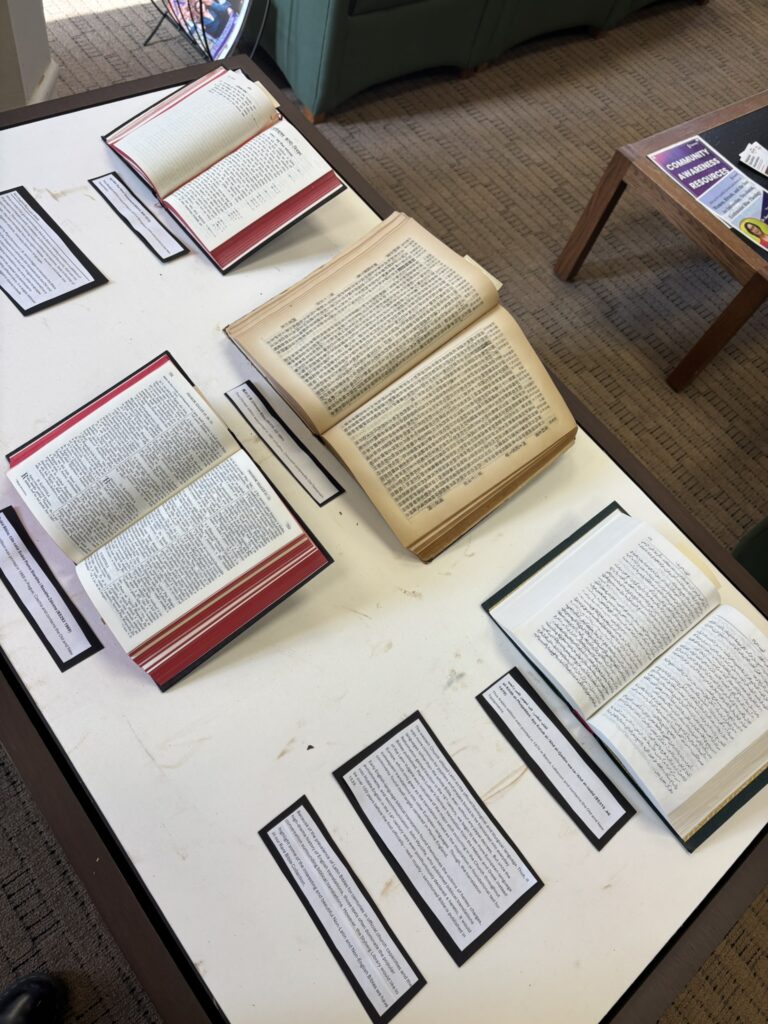
Because of the prevalence of Latin Bibles for centuries in official church capacities and the high-drama history of English translations, those texts often dominate the popular conversation surrounding biblical translations. However, the Styberg Library would like to highlight some of the interesting and beautiful Non-Latin and Non-English Bibles we have in our Rare Bible Collection.